About this hearing test service and who runs it
Send a short description of what you have noticed. An audiologist covering your part of the Fylde Coast will reply with their availability, and there is no charge for that first conversation.
What happens when you enquire about your hearing
You notice something has changed. Conversations in busy rooms are harder to follow, or the television needs turning up past where it used to sit. You are not sure if it matters yet, but it stays on your mind.
Sending an enquiry here means describing what you have noticed. That information goes to an audiologist who works across Blackpool and the Fylde Coast. They read the details before they call you back, so the first conversation starts with what you actually experience rather than a generic list of questions.
The audiologist decides whether a full test makes sense right away, or whether a brief discussion over the phone answers enough to put your mind at rest. Either way, you speak to someone registered with the Health and Care Professions Council, which is the statutory requirement for anyone practising as an audiologist in the UK.
Who carries out the hearing assessments
Separate specialist firms handle the clinical work. Each employs its own audiologists, who hold degrees in audiology and maintain registration with the Health and Care Professions Council. The clinics operate independently, setting their own appointment times and choosing the equipment they use.
Some run from fixed premises in towns like Lytham St Annes, Thornton Cleveleys or Fleetwood. Others travel to homes across Kirkham, Freckleton, Bispham and Poulton-le-Fylde for people who find getting out difficult. The type of appointment depends on which firm picks up the enquiry and what suits the person asking.
Because the specialists work separately, the exact steps vary slightly between them. One might ask you to fill in a form before the appointment; another might take those details over the phone. What stays consistent is that an HCPC-registered audiologist performs the assessment and explains the results directly to you.
Where the appointments take place
Clinic rooms exist in most towns along the coast. If you live near a high street practice, the audiologist may suggest coming in. The room is set up to keep outside noise down, which matters because even a standard screening needs a quiet environment to give reliable readings.
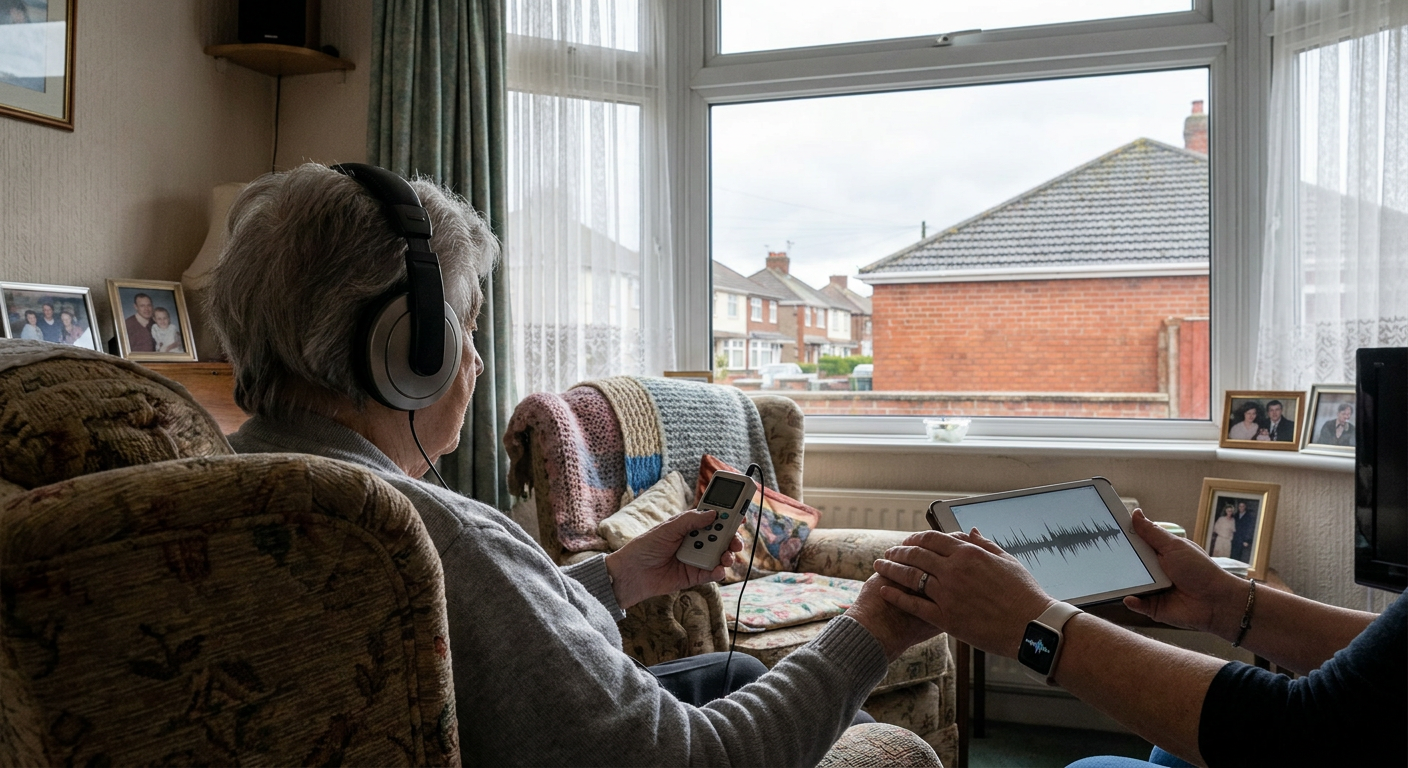
Home visits suit people who cannot travel easily or who simply prefer familiar surroundings. The audiologist brings portable testing equipment and sets up in whichever room works best. Background noise is harder to control in a living room, so the specialist accounts for that when interpreting the results.
Noise-induced damage from years of loud work sometimes requires more detailed testing. In those cases, the audiologist uses specific tones to map exactly which frequencies have dropped off, which helps determine whether hearing aids would help or whether further medical investigation is needed.
After the test: reports, fittings and repairs
A hearing test produces an audiogram. It is a chart showing how softly you can hear at different pitches. The audiologist walks through it with you, pointing out where your hearing sits compared to normal ranges and explaining what the gaps mean in daily life.
If aids would help, the same specialist usually handles the fitting. They discuss styles behind the ear or inside the canal, depending on the shape of your loss and your preference. Follow-up appointments check that the settings match real environments, not just the quiet clinic room.
Existing aids sometimes stop working properly. A whistling sound, muffled output or a dead device can often be fixed without buying new ones. Audiologists on the Fylde Coast repair and reprogram aids from various manufacturers, cleaning out wax buildup or replacing worn tubing during the visit.
What you do and what the audiologist does
You describe what you have noticed. The audiologist handles the clinical decisions, the testing and any fitting that follows. Your part takes minutes.
What a specialist does
- Review your description before making contact
- Carry out the hearing test in a controlled setting
- Explain the audiogram and what the results mean
- Recommend and fit hearing aids if appropriate
- Provide aftercare, adjustments and repairs
What you do
- Describe the changes you have noticed in your hearing
- Choose between a clinic appointment or a home visit
- Attend the scheduled assessment
What you receive after an assessment
Every test produces evidence. The audiologist records what they find and explains it in terms that relate to your daily life at home and out in town.
Written audiogram
A chart showing your hearing thresholds at each pitch, kept for your records and future comparisons.
Plain-language summary
This section explains who runs the site and how enquiries for hearing tests across Blackpool and the Fylde Coast are handled by separate specialist firms. It gives visitors context before they book.
Fitting plan if needed
A recommendation for aid style and settings based on your specific pattern of hearing loss.
Ask about a hearing test
Your message goes to an audiologist covering your area. They will respond with available dates. Sending an enquiry does not book anything or commit you to a purchase.
- No obligation to proceed
- Local audiologist replies
- Clinic or home visit