Fylde Coast
When the family says the TV is too loud
A hearing test settles whether the volume really needs turning up. Send an enquiry to arrange one at a local clinic or in your home, with no charge for the appointment itself.
Why the television is usually the first thing noticed
Television dialogue sits in a narrow band of sound. It relies on mid-range frequencies to carry consonants, the short sharp sounds that separate one word from another. When those frequencies begin to fade, speech turns into a murmur while background music and sound effects stay perfectly clear.
You turn the volume up to catch the words. Everyone else in the room hears everything louder than they want it. This mismatch is one of the most common reasons people start to wonder about their hearing, long before they struggle in conversation or miss the doorbell.
The change happens slowly. A single notch on the remote does not feel like a problem until someone points out you are sitting at twenty-five while they were comfortable at fourteen. That gap between what you need and what the room tolerates is often the first real sign of a shift in how your ears process sound.
What fades first and what stays
Hearing rarely drops across every pitch at once. The higher frequencies tend to go first. These are the sounds that give speech its shape: the difference between "fin" and "thin", or "sat" and "fat". Vowels sit lower down and keep their volume longer, so you still hear that someone is talking without catching what they say.
This pattern explains why a noisy pub becomes difficult while a quiet kitchen stays fine. In silence, context fills the gaps. In noise, the brain needs every consonant to keep up, and the missing ones leave sentences half-finished.
Losing the top end of hearing does not mean going deaf. It means the ear has stopped passing certain details through to the brain. An audiologist measures exactly which pitches have dropped and by how much, using tones played through headphones in a treated room. The result is a chart showing where your hearing sits today compared to normal thresholds.
What a hearing test actually involves
A specialist audiologist runs the test. They place headphones over your ears and play a series of tones, starting quietly and moving up until you press a button each time you hear one. The test covers low rumbles through to high whistles, mapping the softest sound you can detect at each pitch.
They also check how well you understand speech, playing recorded words at different volumes and asking you to repeat them back. This part matters because two people can have identical tone charts yet manage conversation very differently.
The appointment takes around thirty minutes. You get the results immediately, shown on an audiogram that plots your hearing against standard ranges. If the audiologist finds a loss, they explain what it means for daily life and whether a hearing aid would help. You decide what happens next. There is no pressure to buy anything on the day.
Where to get tested around Blackpool
Clinics run these tests across Blackpool and the Fylde Coast. Appointments are available in town centres and smaller locations like Lytham St Annes, Thornton-Cleveleys, Fleetwood, Poulton-le-Fylde, Kirkham, Bispham and Freckleton. You pick whichever is easiest to reach.
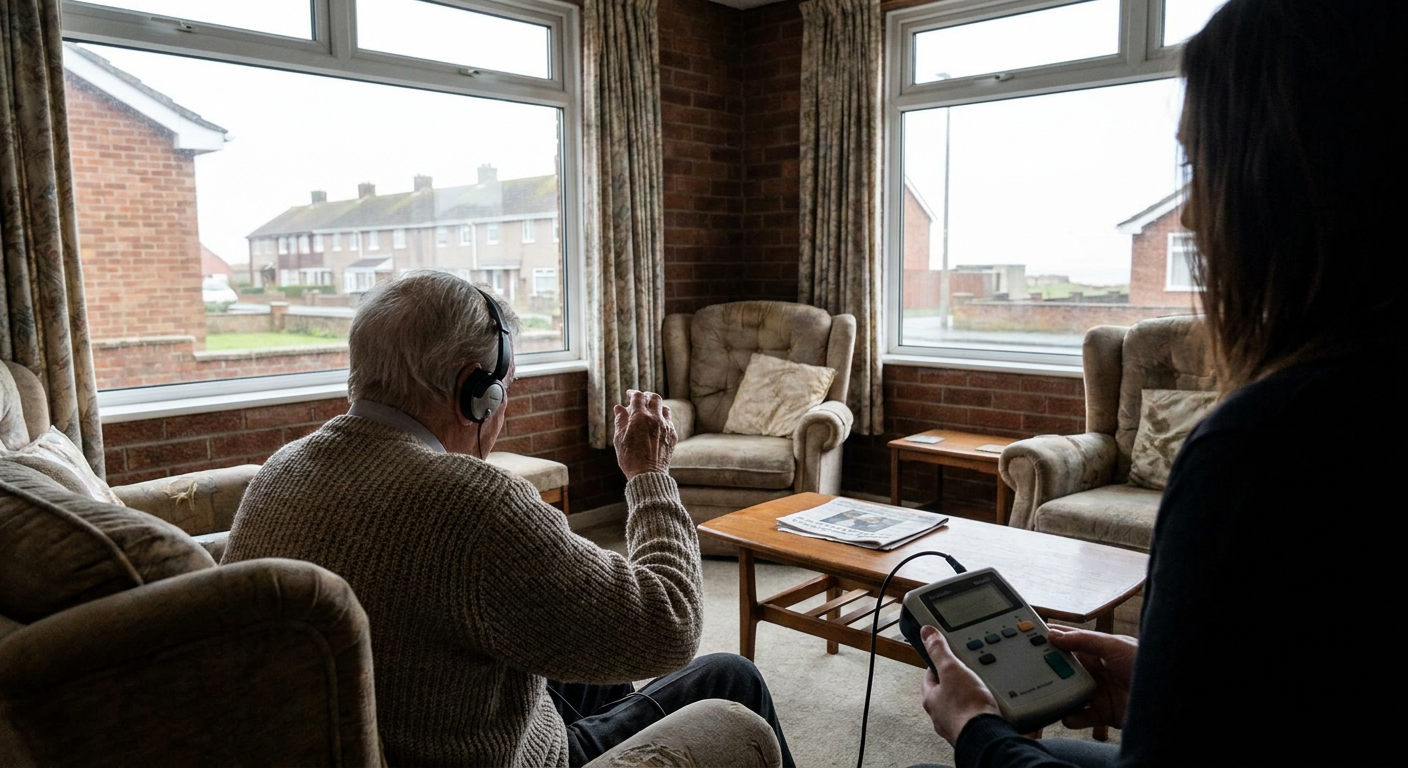
If getting out of the house is difficult, a specialist audiologist can visit your home instead. They bring portable equipment that produces the same measurements as a clinic booth. The test works the same way, just in your own chair.
Send an enquiry to arrange either option. Describe what you have noticed, such as the television volume creeping up or family members repeating themselves, and the right appointment follows. You receive the audiogram and a plain explanation of what it shows, leaving you free to act on it or simply file it away for comparison later.
Questions people ask before booking a test
These are the things people wonder when they first suspect their hearing has changed. None of them are silly. Asking them is how you decide whether to book an appointment.
-
Am I going deaf or is this just age?
Most gradual changes are age-related frequency loss rather than total deafness. A test shows exactly what has shifted.
-
Will I be pressured into buying a hearing aid?
No. The audiologist gives you the results and explains your options. Any decision to proceed is yours alone.
-
Why can I hear the dog bark but not my partner?
Barks use low frequencies that often remain intact while speech consonants rely on higher pitches that fade first.
-
Is it worth testing if I only notice it with the TV?
Yes. Television speech loss is frequently the earliest measurable sign of a high-frequency drop.
-
Can I get tested without travelling to a clinic?
A specialist audiologist can assess your hearing during a home visit using portable equipment.
Common questions about hearing tests
How long does a hearing test take?
The assessment usually takes around thirty minutes. That includes the tone test, speech checks and time for the audiologist to talk you through the results on the audiogram.
Does a hearing test hurt?
No. The audiologist places headphones over your ears and plays a series of tones at different volumes. You press a button each time you hear one. Nothing enters the ear canal during this part of the test, so there is no discomfort or invasive procedure involved.
Do I need a referral from my GP?
No. You do not need to see a doctor first. You can book directly with an audiologist for a private hearing assessment. Self-referral is the standard route, so you can arrange the appointment yourself without waiting for a referral letter from your GP surgery.
What happens if the test shows a problem?
The audiologist explains the type and degree of loss. If a hearing aid would help, they outline the fitting process. You choose whether to proceed.
How much does a hearing test cost?
The initial hearing assessment carries no charge. You pay nothing for the test itself or for the audiologist to explain your results afterwards. If you later choose to have hearing aids fitted, those are priced separately, but the assessment and the discussion that follows it are free.
Find out what the rising volume means
Send an enquiry describing what you have noticed. A specialist audiologist will arrange a hearing test at a local clinic or in your home. There is no fee for the assessment and no obligation to proceed further.
- No charge for the test
- Clinic or home visit
- Results given on the day