Noise exposure
Hearing tests for Blackpool's noisy workplaces
Years around loud machinery, music or dock work leave a specific mark on your hearing. Find out what that pattern looks like on an audiogram and why a baseline test gives you something concrete to measure against.
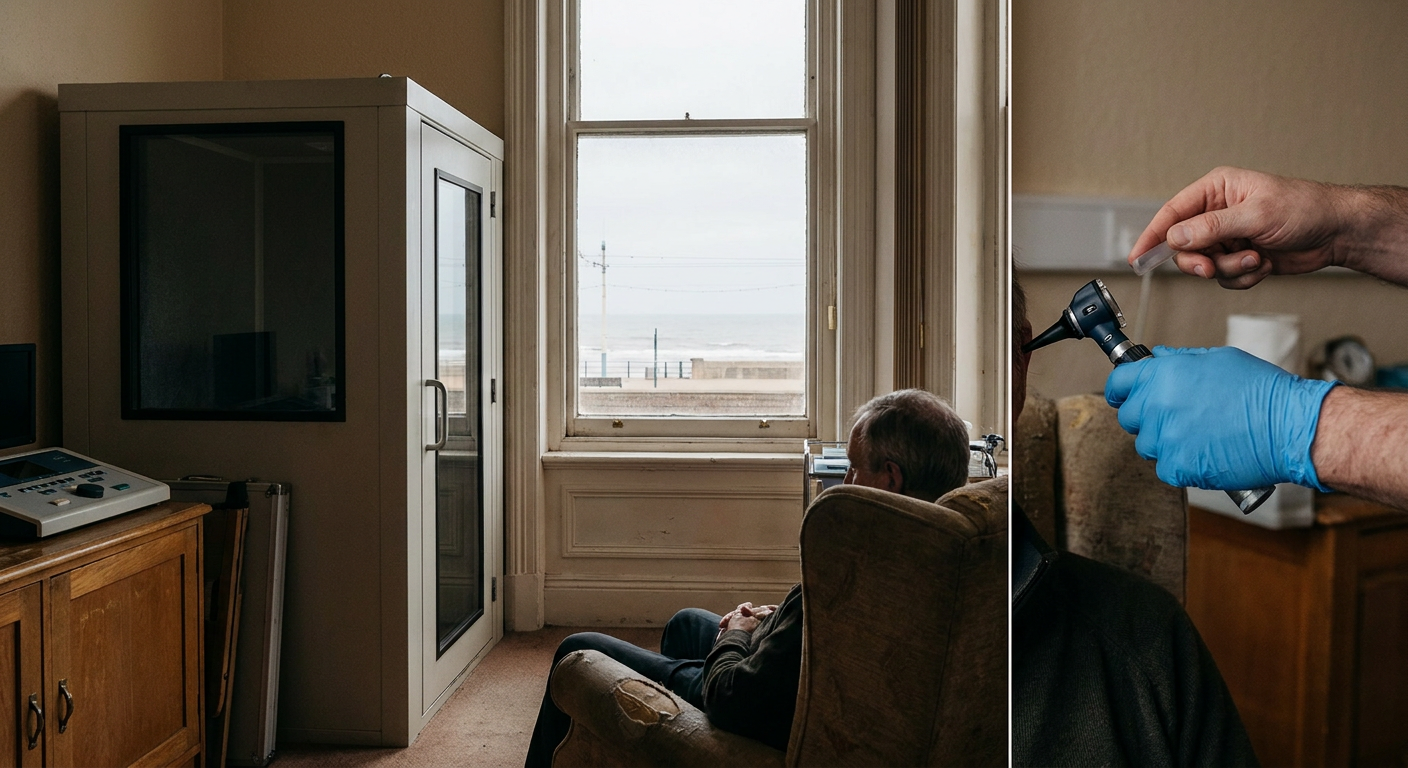
Loud rooms and long shifts across the Fylde Coast
Blackpool has always been a loud town. The arcades, the nightclubs, the winter gardens, the docks at Fleetwood, the factories along the tram route. People worked in these places for decades, often without ear defenders because nobody handed them out.
If you spent years in hospitality pulling pints under speakers, working the stage door at a venue, loading cargo where engines idled all day or standing next to a press in a factory, your ears absorbed that noise every single shift. You got used to it. Everyone did. Getting used to the sound is exactly how the damage happens without you noticing.
The noise did not feel dangerous at the time. It was just the job. But sustained exposure above certain levels wears down the hair cells inside the inner ear, and those cells do not grow back.
What a noise notch looks like on an audiogram
An audiologist plots your hearing on a graph called an audiogram. The line shows how quiet a sound can be before you stop hearing it at each pitch. Age-related hearing loss usually slopes downward evenly, losing the high notes first but gradually across the board.
Noise damage draws a different shape. It dips sharply at one specific frequency, usually around 4000 hertz, then recovers slightly at the higher pitches. Audiologists call this a noise notch. It is the signature left by years of loud environments.
You might not notice the dip yourself because it sits in a narrow band. But it affects how clearly you hear consonants. Words start to blur together, especially when background noise is present. Someone with a noise notch often hears that people are talking but cannot make out what they are saying. That confusion is the notch at work.
Why a baseline test matters now
A baseline hearing test records exactly where your hearing stands today. It does not fix anything. It simply draws the line so you have a reference point.
Without a baseline, any future change is guesswork. If your hearing drops further in five years, neither you nor an audiologist will know whether that drop happened slowly or suddenly, or whether it matches the old noise exposure or points to something else entirely.
Having the numbers written down means you can compare them later. A specialist firm performing the test will place headphones on you, play tones at different pitches and record the softest ones you hear. The whole appointment takes less than an hour.
For anyone who spent their working life around noise on the Fylde Coast, that single hour produces a document worth keeping. It turns a vague worry into measured fact.
When ringing joins the picture
Noise damage rarely travels alone. Many people who notice trouble following conversations also hear a ringing, buzzing or hissing sound that has no external source. This is tinnitus, and it frequently accompanies a noise notch on the audiogram.
Tinnitus is not a disease itself. It is a symptom generated by the auditory system trying to compensate for missing input. When the hair cells at 4000 hertz stop responding, the brain sometimes fills that silence with noise.
A separate specialist firm can assess tinnitus during the same appointment as a hearing test. They chart its pitch and volume against your audiogram. Sometimes fitting a hearing aid that amplifies the frequencies you have lost reduces the tinnitus as well, because the brain stops searching for sounds it can finally hear again.
Questions from people who worked in noise
These are the things people wonder after years around loud machinery or music. They are ordinary questions, and asking them is the first step toward knowing where your hearing stands.
-
Did my job actually damage my hearing?
Sustained loud noise damages the inner ear. An audiogram shows whether your history left a mark.
-
I hear people but lose the words. Is that normal?
Losing consonant clarity is a common sign of noise-induced hearing loss rather than imagination.
-
Will a test hurt or involve anything invasive?
A hearing test uses headphones and tones. Nothing goes inside your ear and nothing causes pain.
-
Is it too late to bother getting checked?
No. Knowing your current level helps you protect what remains and plan for any support you need.
-
Could my tinnitus be linked to the factory floor?
Ringing often accompanies noise damage. A specialist can map both during one appointment.
Answers about noise and hearing tests
How long does a hearing test take?
Most appointments last between thirty and forty-five minutes. The audiologist runs through several pitches, records your responses and explains the results before you leave the clinic.
Do I need a referral from my GP?
No. You can book directly with a specialist firm. No paperwork from a doctor is required to arrange a hearing test on the Fylde Coast.
Will I definitely need hearing aids if I go?
Not necessarily. The test measures your hearing. If the results show a loss that aids would help, the audiologist discusses options. You decide what happens next.
Can the noise damage from years ago get worse?
The original exposure is over, but age-related changes continue. A baseline test separates old noise damage from new decline so you know what is happening now.
Is there anywhere local to get tested?
Specialist firms hold clinics across Blackpool, Fleetwood, Lytham St Annes, Thornton-Cleveleys, Poulton-le-Fylde, Kirkham, Bispham and Freckleton. If getting to a clinic is difficult because of mobility or transport, the audiologist can carry out the hearing test at your home instead.
What happens if I also have ringing in my ears?
Mention the ringing when you book. The audiologist includes a tinnitus assessment alongside the standard hearing test so both are measured in the same appointment. After looking at the results, they discuss management options suited to what the tests show.
Arrange a hearing test near you
Send your details and a specialist firm will contact you to arrange an appointment. Submitting an enquiry does not commit you to buying anything or booking a specific date.
- No obligation
- Local clinics
- Home visits available