Busy places
Hearing fine one to one but losing the thread in a pub
Find out what happens when background noise drowns out conversation. A local audiologist can run a speech-in-noise test so you know exactly where your hearing stands, with no obligation to buy anything.
Why a noisy room feels different from a quiet one
Conversation in a quiet kitchen relies on the full range of sounds your ears pick up. Vowels carry most of the volume, and they sit in the lower frequencies. Consonants like s, f, th and p live much higher up. They are quieter, shorter and do the real work of separating one word from another.
A busy cafe or pub adds layers of clatter, music and other voices. That background noise fills the lower frequencies first. If your ears still catch low sounds easily, you hear the room perfectly well. But if the higher frequencies have started to slip, the consonants vanish into the noise. You hear that people are talking. You just cannot tell what they are saying.
This is why someone can pass a basic hearing check in a silent booth and still struggle every time they go out. The standard test measures the quietest beep you can hear across several pitches. It does not measure how your brain separates speech from everything else happening around it.
The high-frequency pattern behind the problem
Hearing rarely fades evenly. For many adults, the first change happens above 2000 hertz. That is the band where sharp consonants sit. Lower pitches stay strong for years after the higher ones begin to drop.
You notice it in specific ways. Someone sitting next to you on the sofa is clear. The same person across a restaurant table disappears. You start reading lips without realising it, watching mouths move to fill in the gaps your ears leave open. Group conversations become exhausting because you have to concentrate hard just to follow who said what.
People sometimes assume this means they need to turn things up. But turning up the television makes the vowels louder too, which does not fix the missing consonants. The problem is not volume. It is clarity. And clarity depends on those higher frequencies working properly. When they weaken, speech starts to sound muffled even though the room itself seems loud enough.
What a speech-in-noise test actually shows
A pure tone test tells an audiologist which pitches you can hear in silence. A speech-in-noise test goes further. It measures how well you understand words while recorded background noise plays at the same time.
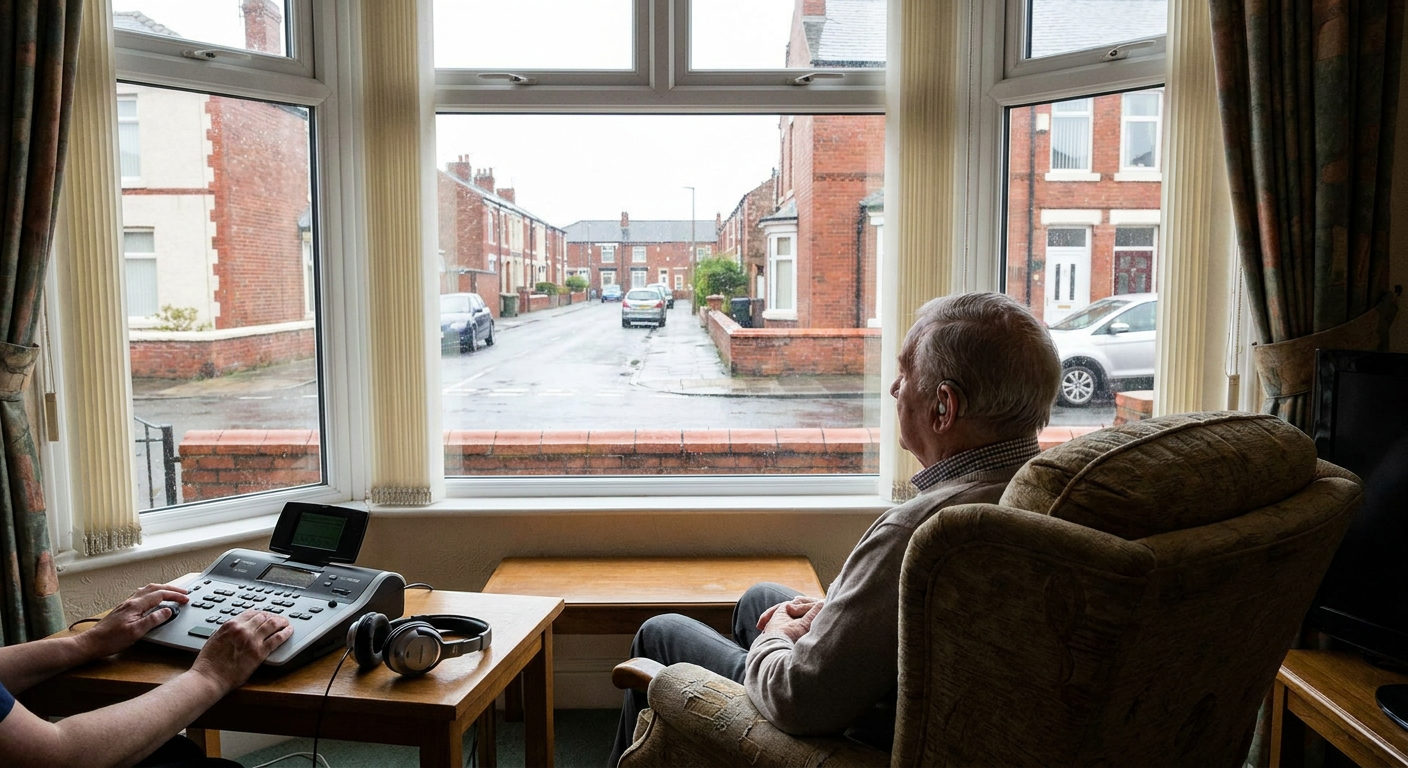
During the test, you sit in a sound-treated room wearing headphones. The audiologist plays sentences mixed with competing chatter or steady noise. You repeat back what you hear. The level of noise changes, getting harder in steps, until the specialist finds the exact point where your understanding breaks down.
This matters because it mirrors real life. A pub does not get quiet so you can listen. The test shows whether your difficulty in busy places comes from a loss of high-frequency hearing, a problem with how the brain processes sound, or both. Two people can have identical tone tests and completely different speech-in-noise scores. Only this kind of testing explains why one of them copes fine in a crowd while the other gives up and sits in the corner.
What happens after the results come back
If the test shows your high frequencies have dropped, the audiologist will talk through what that means day to day. Sometimes the change is small enough that knowing about it helps you position yourself better in rooms, facing the speaker with your back to the wall.
If the loss is larger, a hearing aid programmed specifically for high-frequency gaps can lift those missing consonants without making the whole room boom. Modern devices do not simply amplify everything. They target the pitches you struggle with and leave the rest alone. The fitting process involves careful adjustment so speech sounds natural rather than tinny.
You might also find out that the issue sits partly in how quickly your brain processes fast sounds. In that case, the audiologist will suggest strategies beyond amplification. None of this is decided by guesswork. The test results show exactly where the breakdown happens, so any step taken afterwards addresses the actual problem rather than a vague sense that your hearing is off.
What your experience in busy rooms points to
Losing track of conversation in noise has several possible causes. The details of what you notice help an audiologist decide which test to run first.
- I hear people talking but cannot make out words
- High-frequency hearing loss often causes this. A speech-in-noise test shows how much detail is missing when background sound competes with voices.
- One-to-one chats are fine but groups are impossible
- This pattern suggests the higher pitches have weakened while lower ones remain intact. An audiologist can map exactly which frequencies are affected.
- I rely on lip reading without thinking about it
- Watching mouths compensates for lost consonant sounds. A full hearing assessment reveals whether the gap is mild or large enough to need support.
- Turning up the TV does not help in a pub
- Volume is not the problem when clarity drops. Speech-in-noise testing separates a true processing difficulty from simple quietness.
- Background noise makes me tired and irritable
- Straining to fill in missing sounds takes constant effort. A hearing test identifies whether amplification would reduce that mental load.
How soon to ask about losing speech in noise
The question is not what label fits your hearing, because only a proper test in a treated room settles that. The question is how quickly you should book one. Some signs mean acting now, others mean keeping an eye on things.
-
I stopped going to the pub or club because I cannot follow anyoneToday
Avoiding social situations usually signals a loss large enough to benefit from professional support right away.
What to do Book an audiologist appointment to get a full picture of your hearing.
-
I ask people to repeat themselves constantly in busy roomsSoon
Frequent repetition requests often point to weakening high-frequency hearing that is starting to interfere with daily life.
What to do Arrange a hearing test within the next few weeks.
-
I manage fine but have to concentrate much harder than I used toSoon
Extra effort in noise can be an early sign of high-frequency changes before they become obvious to others.
What to do A baseline test now gives you something to compare against later.
-
My partner says I miss things but I think the room is just loudWorth watching
Disagreement about what was said is common in early hearing shifts. The room may genuinely be loud, or your ears may be changing.
What to do Mention it at your next routine check or book a test if it continues.
None of this diagnoses your hearing. If your ability to follow speech has dropped suddenly or is worsening week by week, ask about it now rather than waiting.
Find out what the noise is hiding
Send your details and a local audiologist will contact you to arrange a hearing test. There is no charge for the enquiry and no pressure to commit to treatment or buy anything on the day.
- No obligation to proceed
- Local Fylde Coast clinics
- Clear test results